




A bathroom vanity has to fit your project before it earns a place in your specification. If you’re comparing wholesale bathroom vanities for a client, start with the cabinet layout, top material and installation requirements—not a photograph alone.
Alya Bath is a bathroom vanity manufacturer and distributor with a documented focus on resellers, contractors, builders and other home-improvement businesses. Its recovered company pages describe manufacturing, importing and distributing vanities, with a New Jersey warehouse in the company’s history. This site brings that catalogue together with preserved specifications and practical planning resources, so you can compare documented designs and identify what still needs confirmation. 1 2
A wholesale brand, with clear limits on archived information
“Wholesale” can describe different buying arrangements. For example, a contractor looking for a supplier needs to know if a website serves trade accounts or offers direct homeowner checkout. Alya Bath’s preserved About page and Terms identify Alya Bathroom Supply, LLC as wholesale-only, serving resellers and trade professionals rather than selling directly to end users. The archived Terms also describe account approval before purchasing. 2 3
There’s a conflict you shouldn’t have to discover after planning a visit: the archived FAQ describes a public showroom, while About and Terms say the business isn’t open to the public. Neither version confirms current showroom access. Contact support@alyabath.com before making travel or purchasing plans, and see the archived FAQ and policy notes for the source conflict. 2 3 4
The recovered company history also describes an own-factory approach to control over materials, design, quality and packaging. That’s useful background on the brand’s positioning, not a verification of today’s production or warehouse operations. Historical order-processing times, shipping arrangements, warranty wording and environmental statements aren’t current guarantees on this site. 1 2
Compare design, finishes, materials and hardware
A shared finish name doesn’t make two vanities interchangeable. For a hypothetical remodel, two gray cabinets could have different depths, storage layouts and faucet openings. Alya Bath’s original homepage organized its product strategy around design, finishes, materials and hardware. Use those same subjects to compare a model against your project brief. 1
Design: choose the storage and mounting arrangement first
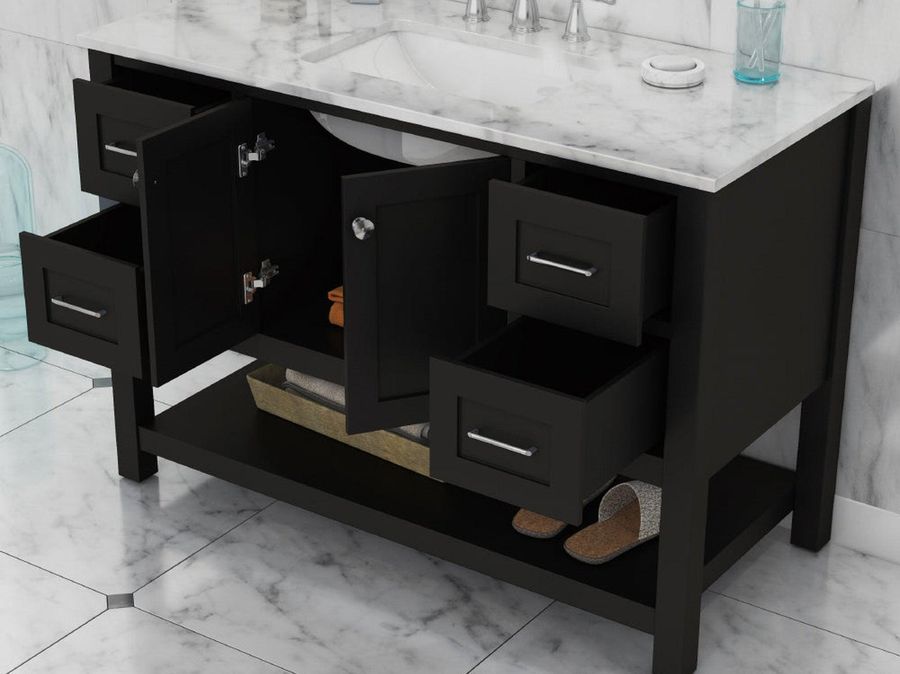
An attractive cabinet can still block a door or leave the household without usable storage. Compare the enclosed cabinet approach in Norwalk with the documented display bottom shelf in Wilmington . The shelf is a meaningful design difference; decide if open storage suits the room before choosing a finish. 5 6
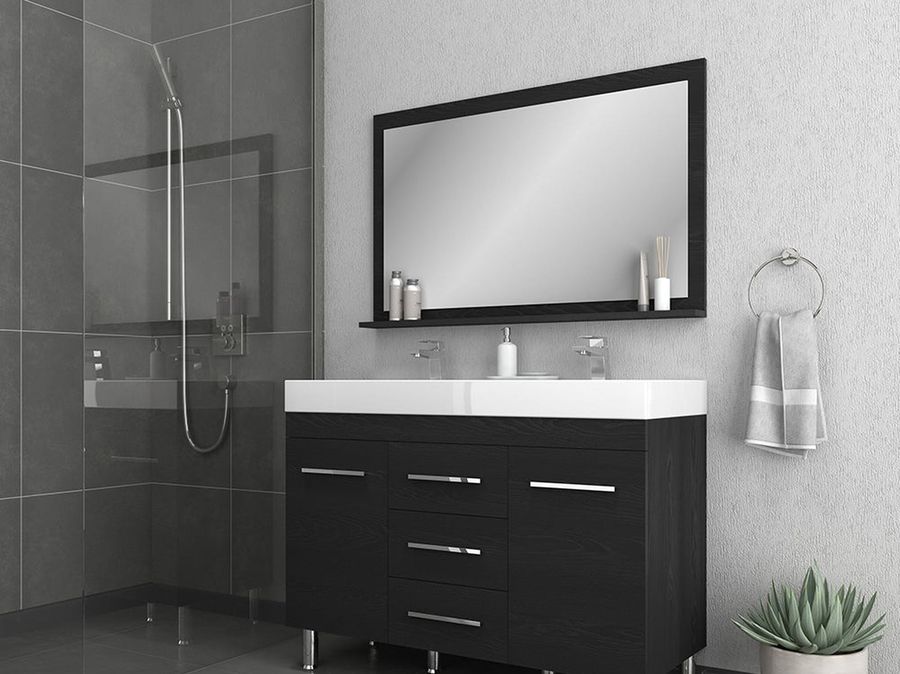
For mounting-led comparisons, Ripley has historical wall-mounted and freestanding records. Paterno and Sortino provide further collection routes. Open the model or size page before assuming that a family name establishes a particular mounting method. 7
Finishes: keep the recorded name attached to the model
A screen image can’t settle an exact color match with tile or other cabinetry. For example, “Gray” and “Gray Oak” shouldn’t become one finish in a project schedule. Keep the collection, model code and original finish label together, and ask what finish evidence can be provided for the selected item.
The archived Terms discuss variation in wood grain, stone veining and displayed color. Treat recovered photographs as visual references rather than promises that a supplied piece will match every detail. This makes the finish discussion more precise. 3
Materials: check the cabinet and top separately
A marble-top description doesn’t tell you what every cabinet panel is made from. Norwalk’s recovered collection page specifies a 1-inch Italian White Carrara marble top, but its “100 percent solid hardwood” cabinet wording differs from the solid-hardwood-and-hardwood-plywood description in a detailed model record. Confirm the selected model’s construction rather than choosing one version by assumption. 5 8
Top choices also belong to the collection and model. Wilmington records describe Carrara marble; Ripley’s older collection description uses acrylic sink terminology. Vanea records describe white quartz tops with ceramic undermount sinks. Don’t transfer those material descriptions between families. The countertop materials guide helps you compare the top and basin together. 6 7 9
Hardware: read past the soft-close label
Soft-close wording doesn’t tell you how many drawers a particular cabinet has or where the drain passes through them. Norwalk and Wilmington collection descriptions mention dovetail drawers and full-extension soft-closing glides; the older Ripley description refers to European hardware and soft-closing operation. Those are source-specific descriptions, not universal specifications for every Alya Bath model. 5 6 7
Check the detailed page for the actual door and drawer layout, handle finish and faucet opening. For example, the recovered Norwalk 24-inch gray record specifies brushed nickel hardware and 8-inch widespread faucet holes. Use the faucet-hole spacing resource before pairing a faucet with a documented top. 8
Turn a shortlist into an installation plan
A nominal width can hide a fit problem. If you’re replacing a vanity between two finished walls, start with the width index and then follow how to measure for a bathroom vanity . Check the recorded dimensions and any preserved drawing against the opening, plumbing position and door movement. A names-only historical model card isn’t an installation drawing.
For an accessibility-required project, an open area beneath a floating cabinet doesn’t establish compliance. The US Access Board’s lavatory guidance addresses forward approach and knee and toe clearance. Have the designer or code professional check the complete arrangement under the requirements that apply to the project; this catalogue doesn’t establish an ADA-compliant Alya Bath model. 10
Moisture planning matters even if a cabinet description mentions a protective coating. A slow leak under a basin needs repair, not a different finish name. EPA guidance emphasizes correcting water problems and using bathroom ventilation to reduce moisture. Build accessible plumbing checks into the handover, and use the vanity care guide for material-specific questions. 11
The blog covers selection, installation and care. For household-use examples, the bathroom design blog includes resources on storage and daily routines, alongside preserved articles such as the efficient family bathroom and small bathroom remodel tips .
Send a specification question, not just a photograph
A collection name alone can leave a trade inquiry ambiguous. If you’re comparing a Norwalk gray model, include its recorded code, nominal width and the page link rather than asking only about “the gray vanity.” Email support@alyabath.com with your business role, selected model and finish, project location, quantity and the facts you need confirmed.
Ask for the applicable dimension drawing, component inclusions and current trade arrangements before committing the item to a schedule. This static catalogue has no active checkout or account registration. Your next useful step is to resolve the exact model’s missing or conflicting specification.
References
- Alya Bath recovered homepage and original strategy themes
- Alya Bath preserved About and wholesale-only positioning
- Alya Bath archived trade terms and material variation notes
- Alya Bath archived FAQ and conflicting showroom claims
- Alya Bath recovered Norwalk collection description
- Alya Bath recovered Wilmington collection description
- Alya Bath recovered Ripley collection description
- Alya Bath recovered Norwalk HE-101-24-G-CWMT model record
- Alya Bath recovered Vanea AB-VAN24-G model record
- US Access Board guide to lavatories and sinks
- EPA A Brief Guide to Mold, Moisture and Your Home